Wednesday, July 17, 2013

Lay of land

The Friday Times ISSUE | May 03-09, 2013


There is a vast stretch of land on the far side of the Karachi fish harbor channel that has historically been used for boat building, boat repairing and had a fueling station.

Because of a lack of infrastructure, this area was called Kala Pani. Just short of Kala Pani, a Chota Gate led to what is now called Machher Colony.

Years ago, the government allocated a plot in that area to set up a seafood processing plant. The fisheries authorities first sold the nearby plots for cheap to their favorites, and then some rogue groups began to occupy other plots in the neighborhood. None of this land was sold publicly, for fair value.

Now the Karachi Fish Harbor Authority, in concert with its absentee allottees, is battling against the land mafia, who is unwilling to surrender the possession of that land.

The best resolution to this problem is for the KFHA to cancel all previous allotments and sell the land through public auctions. At the same time, a major cleanup operation should be carried out to throw out the illegal occupants. That is the only way a fair amount of money will go into the national exchequer.

Mazhar Butt

Science and Society

TFT CURRENT ISSUE | May 10-16, 2013 - Vol. XXV, No. 13 The Friday Times


Sir, I think it is unfair to blame religion for the decay of scientific fervor particularly among the Muslims. Science flourished best during tyrannical eras - a fact that is quite evident from a look history. Pakistan is replete with scientists but they are merely academics or copy cats having little or no talent or inclination for technical or innovative work. It's a pity not knowing even a single Pakistani scientist who has made any technological accomplishment in the last few decades, and there is a lack of any patent for any tangible invention of any type. It is self-motivation and not religious beliefs that tend to bring scientific and technological progress. Even government funding is not necessarily required for scientific work. One just ought to have a will. Were it not so, some Muslims wouldn't have won acclaims for their scientific achievements abroad. Here in Pakistan, poverty, non-protection of intellectual property rights, and a lack of appreciation are the main reasons why our people lag behind in the field of scientific and technological innovation and inventions.

Mazhar Butt, Karachi.

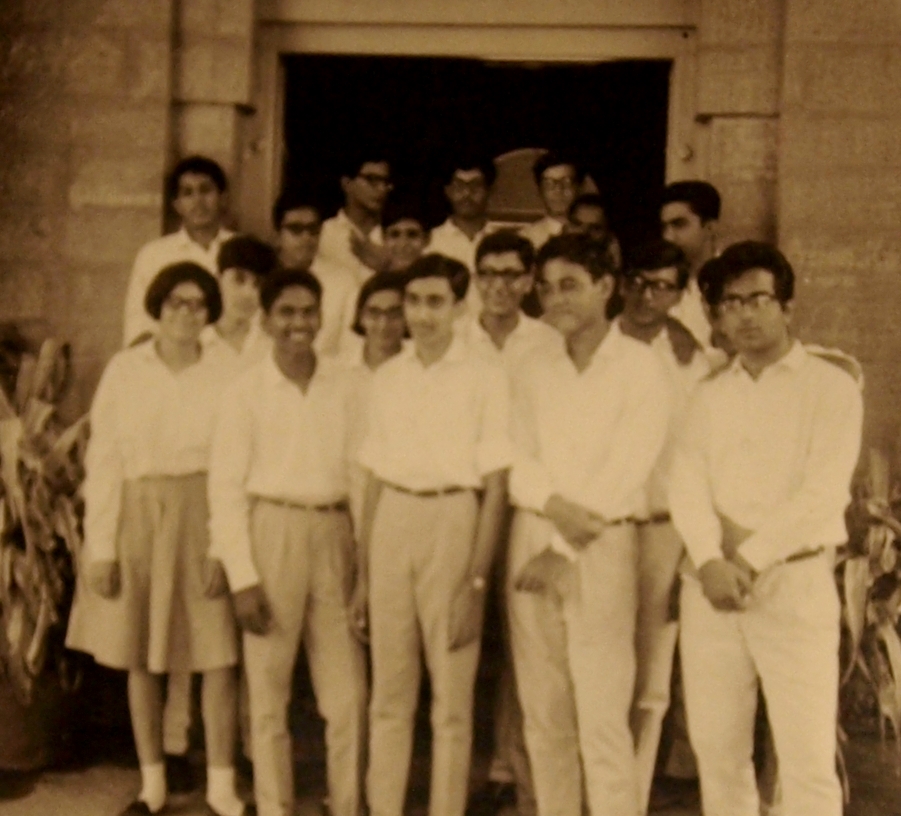
The day I left KGS

Pure Nostalgia

The day I left KGS

Our seafood exports

http://www.thenews.com.pk/Todays-News-11-128479-Our-seafood-exports


Although Pakistan’s seafood exports have grown considerably even after the European Union’s ban, this achievement cannot be attributed to a real increase in terms of value. Compared with its neighbouring countries, such as India, Pakistan is still getting lower prices for its fishery products. The boost in value can mainly be attributed to the weakening of rupee against the dollar and the export of the last bit of edible fish in Pakistani waters to cheap markets such as China, Taiwan, Korea, Vietnam, Thailand and some other Far East countries along with Egypt and the Middle East. It’s good news that somehow the marine fisheries department has persuaded the EU to lift the ban on seafood exports from Pakistan but it must be noted that allowing one or two processing units is not going to resolve the problem just as a swallow doesn’t make a summer. The entire fisheries and fishing sector needs immediate revamping and renovation. Unless this is done it is doubtful if it will be possible to establish traceability and cold chain.

Unfortunately, a look at our harbour shows no signs of improvements in fleets design or the technology employed in the processing units. Fish is still stashed on the dirty fish-harbour floors and sold and transported with little or no ice. Most of the seafood processing units do not have adequate facilities for making ice and the ones which do have equipment are usually out of order. Almost all processing units are run by obsolete freezing and cold-storage machinery and equipment. There are poorly insulated stores where finished product deteriorates due to rapid fluctuations in storage temperature. The EU continues to be the largest market for Pakistani shrimp and some kind of fish. But with the dwindling stock of shrimp as well as fish, I am afraid export of these to the EU will be done at the cost of our fauna and flora. A reasonable balance ought to be kept if the welfare of the industry is desired before it is wiped off and the last fish caught.

Mazhar Butt, Karachi

Utilising export refinance facility

http://beta.dawn.com/news/747932/utilising-export-refinance-facility


RECENTLY the SBP has reduced the discount rate by 1.5 per cent, thereby reducing it to 10.5 per cent. Since the discount rate is linked to export refinance, exporters have urged the authorities to reconsider lowering it as well.

The reduction in export refinance to exporters will tend to assist exporters to boost their exports but the question is: Is all the export refinance already advanced to them fully employed by the exporters for the purpose it is advanced for?

Looking at the overall performance of the industrial exporting sector, it is doubtful that export refinances are genuinely employed for the right purpose. Although this tendency may be found in many exporting industries, the most badly hit exporting sector due to this irregularity is the seafood exporting industry.

A few years ago the largest seafood exporter in Pakistan got busted due to vagaries of utilising bank loans of more than Rs2bn out of which Rs95m is still unpaid or said to be written off by its financing institution without the SBP’s approval.

Even after this, conditions in the fisheries sector have not improved and poor fishermen are not readily paid for their hauls by exporters. This shows the poor cash flow of those exporters who have already used the huge amounts of export refinances from the financial institutions, but are unable to pay promptly.

It also goes to show that the low-interest money that was advanced to them for buying raw seafood has been siphoned away in other pursuits, thereby creating cash crunch to such exporters. Had all export refinances been invested for the intent they were advanced, seafood exporters should be able to pay for their purchases of raw material (fish/shrimp) to the hardworking fishermen on the spot.

But this is not being done. This fact alone reflects on the mystery of misutilisation of export refinances by exporters.

Frozen seafood is an expensive item and soon builds up in value to meet the 1:1 ratio of borrowing vs exports (previously the SBP ratio was 1:2.4 or one part borrowing vs 2.4 times export).

The banks usually count eligibility for export refinance on the basis of this value and sooner or later are risked to lose their money if the same has not been spent for the right purpose of its granting, viz, purchase of fresh seafood for processing and exports.

Although financial institutions are bound to verify the stocks hypothecated against export refinances/loans advanced, this is seldom done or done in a superficial casual manner.

Thus financial institutions never come to evaluate the real value of stocks held by the exporter to cover the loan. Then there comes a time when the exporter faces market upsets or quality claims; his exports dwindle to meet the set export target and he goes bust.

Although this aggravation may continue for some years unnoticed by the loan-giving agencies, finally there goes a blast and the matter ends up in the hands of banking courts.

This is a very serious matter which need foremost and immediate attention of the SBP and other concerned authorities if they are looking for better outcome of export refinance facility to exporters not only in the seafood exporting sector but in the overall exporting industries of Pakistan.

If the utilisation of export refinancing facility is fully employed in any exporting sector, be it fisheries, textiles and manufacture of other items, there is no reason that these industries won't flourish without raising an unfair hue and cry over mildly inflated export refinance rates.

MAZHAR BUTT Karachi

Bringing defaulters to book

Published in The Express Tribune, September 1st, 2012.


KARACHI:  As far back as 2009, a complete list of bank defaulters was floated in the media. A report of the same was also submitted with the Supreme Court and it was expected that the apex court would take up the matter and bring to book the businessmen, politicians, retired army officers and journalists who were among over 3,300 people who had loans worth Rs153.5 billion written off from 11 financial institutions between 1999 and 2007.

However, it is disappointing to note that this matter of great national interest has been let in abeyance for some unknown reason and the defaulters, as well as their bankers, have not been held accountable for their actions. It would be fully justified if the honourable Court passed an order against the bank loan defaulters and their accessory financial institutions and ordered NAB or the institutions concerned to bear the mark-up on the bungled up amount if they fail to recover the same in the grace time awarded by the Supreme Court. A similar order has been passed by the Court in the missing Nato containers case. Unless there is quick adjudication on the case, the national exchequer will lose billions of rupees.

Mazhar Butt

Online access to electricity bills

Published in The Express Tribune, October 13th, 2011.


KARACHI: In this day and age, it is a bit surprising that our utility providers do not have systems in place whereby their consumers can access their billing information online. For instance, to get a bill for my electricity connection, whenever it is not delivered on time, I have to go to the local KESC office, and spend a lot of time in getting a copy. This is a waste of time and even the utility would be better off if it enabled its subscribers to access this information on the internet.

Also, at times, when there is a dispute in the bill, a subscriber needs the entire billing history, or for a certain period of time. This, too, is usually very difficult to get hold of, though it should be a formality for a consumer who pays his bills in full and on time.

The KESC would be doing it millions of consumers a huge favour by moving this whole system of billing online.

Mazhar Butt